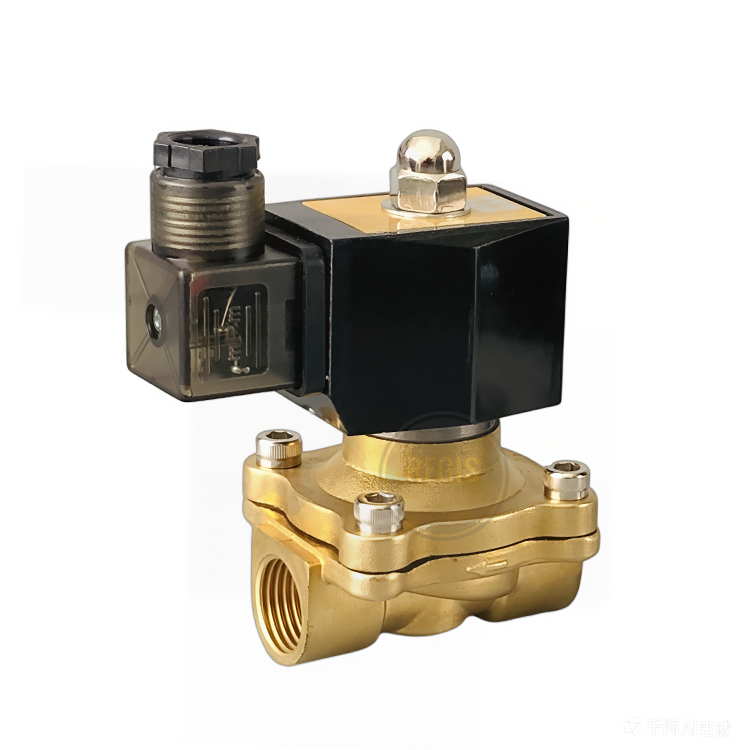
At its most basic level, a two-way solenoid valve is an electromechanical device used to control the flow of liquids or gases in a system. These valves are designed to open or close the flow path, allowing or preventing the passage of media based on electrical signals.
As the name suggests, a two-way solenoid valve has two separate ports: an inlet (for fluid or gas entry) and an outlet (for discharge). The valve operates using an electric current that energizes the solenoid coil, which generates a magnetic field. This field moves an internal plunger or armature, which closes or opens the internal passage between the two. This mechanism enables the user to start or stop the flow of media with precision and reliability.
When you disassemble a two-way solenoid valve, these are the parts you'll find:
Solenoid Coil: The coil powers the valve. When an electric current passes through its copper windings, a magnetic field is generated, this activates the plunger. Most coils are built to withstand high temperatures, vibration, and voltage fluctuations, making them dependable even in harsh environments.
Valve Body: This houses the internal components and directs fluid flow. It is commonly made from stainless steel, brass, or reinforced thermoplastics, especially in high-pressure versions where strength and corrosion resistance are critical.
Plunger or Armature: The plunger is a movable iron or ferrite stainless steel core that shifts when the coil is energized. To prevent residual magnetism, the plunger is often coated with brass, glass-filled nylon, PTFE (Teflon), or electroless nickel.
Orifice: This is the opening inside the valve body that allows media to flow. The plunger opens or seals this orifice to control the flow of fluid or gas.
Spring: The spring returns the plunger to its default position (either open or closed) once power is removed from the coil. It ensures fail-safe operation, especially in normally closed configurations.
Seals and Gaskets: Usually made of rubber, seals and gaskets stop leaks from happening, and they should fit impeccably well when you install a valve.
Inlet Port: The entry point for the fluid or gas, usually marked or sized to match system plumbing.
Outlet Port: The exit point for the controlled media, leading to the next stage in the process or discharge.
Lead Wires: A two-way solenoid valve will lean on lead wires to get the electrical current that power up the coil.